MicroPayments Connector IoT
Acquirer, Aggregator & Router
IoT device connector to Bank Hosts & Card Brand Switches
Aggregate and Integrate Payments protocols
from IoT devices, convert and aggregate payments
Custom MicroPayments Integrations
Handle on-device microservice, containers stand-alone
Custom protocol formats for financial messages
Integrate with local, national or global switches
HSM - on-device, with all cryptography
Hight throughput and speed 1000TPS
Integrate Automotive, smart locks, shipping, dispensers
scripting integration for IoT custom and continuous integration
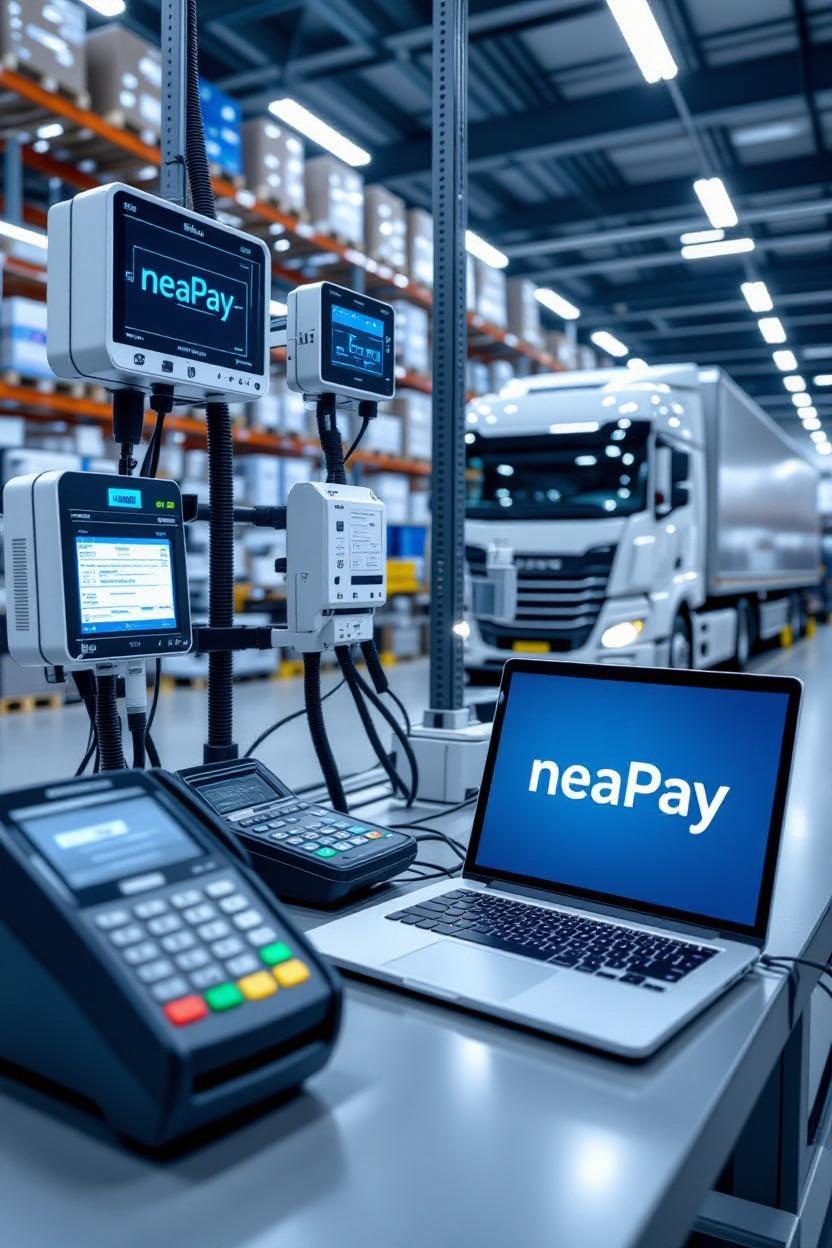
Micro payments integration
Key features and benefits
Micro-transaction Efficiency
Low/Near-Zero Transaction Fees and High Throughput/Scalability (Transactions Per Second - TPS)
Lightweight & Scalable
Micropayments involve tiny amounts (cents or less); high fees make them economically unviable. Logistics generates massive volumes of automated, machine-to-machine (M2M) transactions (e.g., tolls, sensor data purchases, delivery confirmation).
Resource Optimization
Lightweight Footprint (Low computation, memory, and storage)
High load, low consumption
IoT devices (sensors, trackers, embedded systems) are often resource-constrained. The neaPay Iot ISO8583 connector minimizes processing load, power consumption, and data transfer size.
Security & Trust
Robust Cryptography and Authentication
Transactions must be secured using strong, yet resource-efficient, encryption. Devices need unique, unclonable identities for verified payment authorization, preventing fraud and unauthorized transactions. Tokenization and hardware-based root of trust are essential.
Speed & Latency
Instant Finality and Low Latency
Logistics operations (e.g., autonomous vehicles, smart tolls, dynamic route payments) require near-instantaneous payment confirmation for seamless, real-time M2M operations.
Interoperability
Protocol Agnosticism and Standardized APIs
IoT devices use various communication protocols (e.g., MQTT, CoAP, 5G, LoRaWAN) and different payment systems (traditional, crypto). The connector needs to bridge these different technologies.
Reliability & Availability
Offline/Semi-Online Capability and Fault Tolerance
Logistics environments may experience intermittent network connectivity. The system should handle deferred settlement (e.g., using payment channels or edge processing) to ensure transactions complete when connectivity is restored.
Traceability & Auditing
Immutable Transaction Records and Compliance
Detailed, tamper-proof logs of all M2M payments are crucial for auditing, regulatory compliance, and dispute resolution in a complex supply chain. Distributed Ledger Technology (DLT/Blockchain) is often used here.
IoT connector micropayments integration
Connect IoT payments easy
We handle all binary technical complexity ISO8583 data
Connect Card Payments protocols
in the cloud, on-premise or in containers
Automatic stand-in
in case the web host is down
Maximum Security | cryptography
IoT Interface for payments connector demo run video
Technical run of IoT ISO8583 Interface with under 2 minutes with ISO8583 simulator Acquirer and web Host simulator (JSON host)
Micropayments connector ISO8583
Detailed Feature Breakdown

Technical Performance and Resource Management
Off-Chain Processing: Utilizing layer-2 solutions (like payment channels in DLT) or edge computing to process the bulk of transactions off the main network. This drastically reduces fees and latency.
Batching/Aggregation: Grouping multiple tiny micro-transactions from a single device or route into a single, larger settlement transaction to manage costs and network load.
Asynchronous Operation: Allowing devices to queue and send transactions when network conditions are favorable, rather than requiring constant, robust connectivity.
Security and Identity Management
Hardware Security Module (HSM) Integration: Utilizing cryptographic hardware on the IoT device for secure key storage and transaction signing, making the device a "trusted endpoint."
Digital Wallet/Tokenization: Providing a lightweight, tokenized digital wallet for the device to hold pre-funded value or payment credentials without exposing sensitive financial details.
Multi-Signature (Multi-Sig) Controls: Implementing shared authorization logic (e.g., requiring a device signature and a gateway signature) for critical transactions to prevent a compromised single device from causing mass fraud.
Business Logic and Flexibility
Programmable Payments (Smart Contracts): The ability to set up automatic, self-executing payment conditions based on real-world events recorded by the IoT sensors (e.g., "Pay upon successful delivery GPS coordinate match," or "Pay for 1 liter of fuel consumption").
Real-Time Balance/Usage Monitoring: Providing visibility into current device funds and consumption for both preventative fund loading and dispute management.
Multi-Currency Support: Essential for global logistics, allowing transactions to be denominated and settled in different currencies or digital assets.
Integration and Deployment
API Gateway: A well-documented, secure, and resilient API that acts as the primary interface between the resource-constrained IoT devices and the backend payment infrastructure.
Gateway Node Support: The ability for a more powerful intermediary device (a gateway or edge server) to manage transactions for a cluster of less-capable IoT devices.
Protocol Conversion: Built-in logic to interpret payment requests and data transmitted over various IoT communication protocols and convert them into standardized payment messages (e.g., ISO 8583 or ISO 20022).
IoT Payments Protocols Connected
The micropayments connector acts as a crucial bridge between the resource-constrained IoT Communication Protocols and the robust, secure Payment/Financial Protocols.
IoT Communication Protocols /Frontend
MQTT, CoAP, HTTP/HTTPS, 5G/NB-IoT
The connector ingests transaction requests and data from devices using these protocols. It must be protocol agnostic and parse the simple, lightweight messages into a rich payment request.
Payment Protocols /Backend
SO 8583 / ISO 20022 -Traditional Banking, Interledger Protocol -ILP, Lightning Network -LN
The connector forwards the verified, authenticated request to the payment network using one of these standardized financial protocols for final processing and ledger recording.
DLT/Blockchain Protocols /Ledger
Blockchain (Layer-1), Layer-2 Scaling Solutions (Rollups), DAG-based ledgers
The connector utilizes these to ensure immutability (proof of payment), decentralization, and security for the funds being used by the devices.
Autonomous Fleet Services (Vehicles & Drones) 🚗
Automated payment for resource consumption, tolls, parking, and energy/fuel on a pay-per-use basis. This is crucial for autonomous vehicle logistics.
1. Instant Finality: Real-time confirmation for toll gates or charging stations. .
2. Low-Latency Smart Contracts: Automated payment triggered by GPS/sensor confirmation (e.g., entering a zone)
3. Offline/Cached Transaction Capability: To handle payments in areas with intermittent connectivity.
Real-Time Data Monetization (Asset Trackers) 📡
Buying and selling granular, real-time sensor data from cargo/asset trackers (e.g., location, temperature, humidity) between supply chain partners.
1. High Throughput/Scalability: To handle millions of data-point transactions per hour.
2. Immutable Data Provenance: Securely links the data's payment to its original source/sensor ID.
3. Tiny Transaction Size: Support for sub-cent payments for individual data packets.
Pay-Per-Use Infrastructure (Warehouses & Ports) 🏗️
Paying for utility or service access within a defined area, such as renting compute power, accessing a specific crane, or paying a micro-fee for temporary warehouse storage space.
1. Resource-Efficient Authentication: Lightweight security for resource-constrained devices to sign and authorize access/payment.
2. Flexible Metering Logic: Ability to connect payment to variable units (e.g., time, wattage, volume, or weight).
3. Settlement Aggregation: Batching countless small payments from one session into a single, cost-effective settlement.
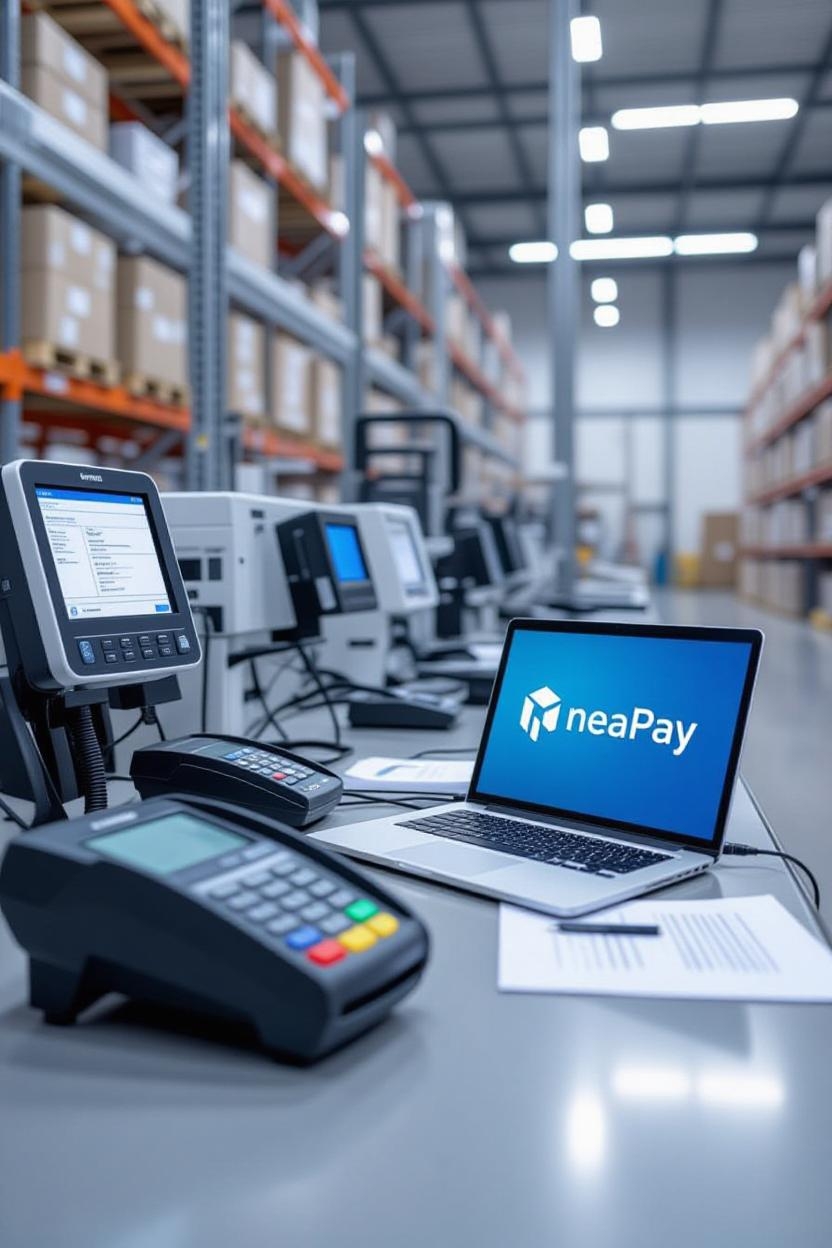
IoT micropayments connector ISO8583
Low-Latency, High-Scalability Transaction Engine 🚀
Why it's necessary: Traditional payment systems incur fees that dwarf the micro-transaction amount and are too slow for real-time M2M interaction. The connector must use off-chain or Layer-2 technology to process transactions instantly and affordably for millions of devices.
Lightweight Cryptographic and Identity Module 🔐
Why it's necessary: IoT devices have limited battery, CPU, and memory. The connector must use resource-efficient, hardware-backed cryptography and unique digital identities (e.g., embedded private keys) to authenticate the device's payment requests without heavy computational overhead.
Autonomous Smart Contract Integration 🤖
Why it's necessary: Payments in logistics are automated and conditional (e.g., "Pay $0.01 per minute of use"). The connector must enforce the programmed business logic using smart contracts, automatically releasing funds upon verification of data from the device's sensors (e.g., the cargo weight, temperature, or GPS location).
Financial Transactions
Easily integrate financial messages other ISO8583 hosts, XML gateways, csv, database
Card File Updates
Integrate clearing, updates and refresh systems with live applications
Database financial records
Financial messages to database-based Transaction Processing systems
Webhooks, Web servers and Web Services integration
Custom clearing file based systems integration
Microservices by scope
Separate Microservices make it easy to improve functionality, redeploy fast, and update separately
Separate managed Instances
Process Complex scenarios separate than high volume traffic.
Process transactions cheaper, smarter and a lot faster
Frequently Asked Questions
The application Core is written in Java, runs on any platform where Java is availableThe configuration and behavior are written in JavScript, which is delivered to the customer
Most users run the POC on a workstation or Windows VM, but some use Mac or Linux platforms for initial acceptance
Non-stop and high load converters run on Linux servers or containers
Any cloud can be used, as long as it runs Docker Containers and an OS that supports Java. RedHat, Ubuntu, CentOS
As a microservice, each converter instance can run its own configuration to perform a separate task
Several converters can be run at the same time for ISO8583, ISO 20022, SQL/Oracle, Visa, Amex, MasterCard, clearing
Each microservice can therefore be redeployed, reconfigured and maintained separately
All connectivity, message formats, business logic, are usually delivered pre-configured, ready to run.
The customer can change all of the above, on-premise.
All configuration is easy to version-control (via git)
Super fast. Processing time is under 1 millisecond.
It can be limited by external IO, HSM, Database, of course.
Each microservice instance can be scaled separately, depending on load.
Scale with containers, service managers, or simply starting several instances
and balancing them via the neaPay Switch-Router
POC in a couple of days. MVP in a couple of weeks.
Most common formats are already available.
The neaPay card payments ISO8583 converter can be set up for a POC in a few hours.
Depending on the size of the scope, we can get the most of it set up and tested in a few weeks.
We can then validate and go Live in 1-2 Months. Get a
Free Price Quote
Download IoT Payments Interface Connector
Watch this deployment video before you download
Recent Articles on Interface
ISO8583 Converter REST-api
Convert ISO8583 to rest-api JSON XML SQL &more
ISO8583 Interface Connector
Integrate ISO8583 card schemes and hosts
ISO20022 SWIFT MT MX Converter
Convert and integrate ISO20022 SWIFT MX with MT , ISO8583
ISO8583 Builder Parser Connector
Most simple solution to build and parse ISO8583 messages
ISO8583 Switch Router
ISO8583 or REST-api Switch Router Bin Amount
Card Payments Authorization
Pre-screen, pre-authorize and Authorize cards and ledger
POS Card Acquirer & Aggregator
Acquiring and Aggregating from POS and other devices
Cards Generator Issuing Host
Generate and export card data for cards issuing and test
ISO8583 Simulator
ISO8583 HISO98 HISO87 simulator
ISO20022 Simulator
ISO20022 & SWIFT simulator
POS Simulator
POS protocols simulator
Mobile Banking Simulator
Mobile Banking Testing Simulator
QR Payments Connector
EMV QR Payments Interface Connector
Micropayments Connector
Micropayments Acquiring Connector & Router
ISO8583 Alerts Notifications
Detect Anomalies, Alerts & Notifications
Clearing & Settlement
Generate Convert Import
Get a free quote, Ask for details
Get help
Read Documentation and Start guides
Online Tools Overview