How to Implement ISO8583 Failover Routing Without a 24/7 Payments Operations Team
Category: ISO8583 Switch Target reader: CTO, Tech Architect, Payments Consultant Keywords: ISO8583 failover routing, payment switch high availability, card transaction failover, ISO8583 redundancy, automatic payment routing failover
At 11:47 on a Friday night, your primary acquirer goes down. Not gracefully — not a planned maintenance window with advance notice and a clean cutover — but abruptly, the way production systems fail: a TCP connection that stops responding, authorization requests that time out without a response, a growing queue of transactions that are neither approved nor declined.
Your on-call engineer gets paged. They log in, assess the situation, determine that the acquirer is unreachable, and begin the manual process of switching traffic to your backup acquirer — if you have one, if they know how to do it, if the runbook is current, if the configuration change can be made without a deployment. By the time traffic is flowing to the backup, twenty minutes have passed. At peak transaction volume, twenty minutes of payment downtime is a meaningful revenue event. At a quieter time, it is still a customer experience failure and an operational embarrassment.
This scenario plays out regularly at organizations that have backup acquirer relationships but have not invested in automatic failover routing. They have the redundancy — the commercial relationships, the technical connections — but the mechanism that activates the redundancy requires human intervention. The gap between having a backup and having automatic failover is not a commercial gap. It is an architectural one.
This article explains what automatic ISO8583 failover routing requires, why it is harder to implement correctly than it appears, and how a pre-built switch handles it in a way that eliminates the dependency on a 24/7 operations team entirely.
The Anatomy of an Acquirer Failure
Not all acquirer failures look the same, and a failover system that handles one type of failure correctly may handle another type incorrectly. Understanding the failure modes is the foundation of designing a failover system that works reliably.
Clean connection loss. The TCP connection to the acquirer closes with a proper FIN or RST packet. The switch receives the close notification immediately and knows with certainty that the connection is down. This is the easiest failure to detect and the one that most custom implementations handle correctly. The switch detects the close, marks the acquirer as unavailable, and routes subsequent transactions to the failover destination.
Silent connection loss. The TCP connection appears to be open — no close notification was received — but the acquirer is no longer processing messages. This happens when a network device between the switch and the acquirer fails, when the acquirer's host process crashes without closing its sockets, or when a firewall silently drops packets without notifying either endpoint. The switch has no way to know the connection is dead until it sends a message and receives no response. Without an active keep-alive mechanism — the echo messages that ISO8583-connected systems exchange on a defined interval — a silent connection loss may not be detected until a real transaction is attempted and times out. Depending on the echo message interval, this detection delay can be anywhere from 30 seconds to several minutes.
Partial failure. The acquirer is reachable and responding, but only to some messages. Authorization requests for certain BIN ranges time out while others succeed. Specific transaction types receive error responses while others are approved normally. This is the most difficult failure mode to detect because the connection is healthy from a TCP perspective and some messages are being processed correctly. A failover system that triggers only on connection loss will not catch partial failures. One that triggers on response timeouts or specific response codes will, but the threshold and response code logic must be carefully calibrated to avoid false positives — triggering failover when the acquirer is processing normally but a specific transaction is legitimately declined.
Intermittent failure. The acquirer oscillates between available and unavailable, recovering briefly before failing again. A failover system that switches immediately on the first failure detection and switches back immediately when the acquirer recovers may trigger repeated failover cycles — sometimes called flapping — that are operationally worse than staying on the failover destination until the primary acquirer has demonstrated sustained recovery. Managing oscillating failures requires a recovery validation mechanism: a period of successful echo message exchanges or successful test transactions before the primary acquirer is reinstated as the routing destination.
Response timeout without confirmation. A transaction is sent to the acquirer, the acquirer processes it, but the response is lost in transit — a network event between acquirer and switch drops the response packet. The switch times out waiting for a response and must decide: was the transaction approved or not? Sending the same authorization request again risks a duplicate approval. Sending a reversal risks canceling a transaction the customer successfully completed. This scenario — a timeout with no confirmation of the transaction outcome — is one of the most dangerous failure modes in payment processing, and handling it correctly requires a specific message flow: the reversal, which tells the acquirer to undo the authorization if it was approved, followed by a fresh authorization attempt if the business flow requires it.
A production-reliable failover system must handle all five of these failure modes correctly. Custom implementations typically handle the first one well and the remaining four partially or incorrectly, because the partial and intermittent failures are the ones that require the most careful design and the most extensive testing to get right.
Why Manual Failover Is Not an Acceptable Production Strategy
The argument for manual failover — keeping a human in the loop for the decision to switch acquirers — usually takes one of two forms: either that automatic failover could trigger incorrectly and cause unnecessary disruption, or that the organization's transaction volume is low enough that brief outages are acceptable.
Both arguments deserve scrutiny.
The false positive concern. The worry that automatic failover will trigger unnecessarily — routing to the backup acquirer when the primary is actually fine — is legitimate if the failover trigger logic is poorly designed. A system that fails over on a single timeout will indeed trigger unnecessarily during normal network jitter. But a well-designed failover system uses multiple trigger conditions evaluated over a defined window: a combination of consecutive timeouts, echo message failures, and specific response code patterns, with hysteresis logic that prevents flapping. False positives in a well-designed system are rare enough to be non-events. The risk of false positives in a poorly designed system is not an argument against automatic failover — it is an argument for using a system that is designed correctly.
The low-volume argument. If transaction volume is low enough that a twenty-minute outage is acceptable, the implication is that payment availability is not a critical business function. For most organizations that have reached the point of evaluating multi-acquirer routing, that implication is incorrect. The question is not whether a twenty-minute outage is survivable — most organizations survive it — but whether it is acceptable. An organization that has invested in a backup acquirer relationship has already decided that payment continuity matters enough to pay for redundancy. Manual failover means that redundancy only activates when an engineer is available, awake, and paying attention. Automatic failover means the redundancy activates every time it is needed, regardless of the time of day or day of the week.
The deeper point is that manual failover does not eliminate the operations team dependency — it makes the operations team the critical path for payment recovery. Every acquirer outage, at any hour, on any day, requires human intervention to resolve. The question is not whether you want to employ people who can do this. It is whether you want payment continuity to depend on their availability at the moment of failure.
What Correct Automatic Failover Requires
Given the failure modes described above, a correct automatic failover implementation requires several distinct mechanisms working together.
Continuous connection health monitoring. The switch must actively monitor the health of each acquirer connection, not just wait for a transaction to fail. This means sending echo messages — ISO8583 message type 0800, network management request — at a defined interval (typically every 60 seconds, though host requirements vary) and expecting a timely response (message type 0810). A failed echo exchange is a health event, not immediately a failover trigger, but a sequence of failed echo exchanges within a defined window is a reliable indicator of connection failure that does not require a real transaction to detect.
Configurable failover trigger thresholds. Different environments have different tolerance for false positives and false negatives in failover triggering. A system processing high-value, low-volume transactions may tolerate a longer timeout before triggering failover to reduce false positives. A system processing high-volume retail transactions may require faster failover to minimize the number of transactions affected during an outage. The trigger thresholds — number of consecutive timeouts, number of failed echo exchanges, response codes that indicate host-side failure — must be configurable per acquirer connection rather than hardcoded.
Reversal handling for timed-out transactions. When a transaction times out and failover is triggered, the switch must send a reversal to the original acquirer for the timed-out transaction before routing a fresh authorization to the failover acquirer. This reversal must be sent and its delivery confirmed — or retried until it is — before the customer is presented with an outcome. The reversal flow is a mandatory component of correct failover handling, not an optional enhancement.
In-flight transaction protection. When failover is triggered, transactions that are already in flight — sent to the primary acquirer but not yet responded to — must be handled correctly. They cannot simply be abandoned. Each in-flight transaction needs a timeout, a reversal if appropriate, and a decision about whether to retry on the failover acquirer. This in-flight protection logic is one of the most complex parts of a failover implementation and the part most likely to be incomplete or incorrect in custom implementations.
Recovery validation before reinstatement. When the primary acquirer becomes reachable again after a failure, the switch must not immediately route transactions back to it. It must first validate that the connection is genuinely stable — a defined period of successful echo message exchanges — before reinstating the primary acquirer as the routing destination. Without recovery validation, intermittent failures cause repeated failover cycles that are operationally disruptive and potentially harmful to transaction continuity.
Failover event logging and alerting. Every failover event — trigger detection, acquirer marked unavailable, transactions routed to failover destination, reversal sent, recovery detected, primary acquirer reinstated — must be logged with timestamps and transaction-level detail. This log is the basis for post-incident analysis, reconciliation of transactions that were routed to the failover acquirer, and review of failover trigger thresholds. Alerting on failover events — a notification to the operations team that failover has occurred — is appropriate even when the failover itself is automatic, because the operations team should know that their primary acquirer is down and be aware of the business impact, even if they do not need to intervene to restore transaction flow.
The Gap Between Having a Backup Acquirer and Having Working Failover
Organizations that have established a backup acquirer relationship sometimes assume that the hard part is done and that failover is a configuration detail. The commercial negotiation, the technical integration, the certification — those are the hard parts. Routing between them should be easy.
The routing decision itself — if primary acquirer is down, send to backup acquirer — is indeed straightforward. The surrounding infrastructure that makes that routing decision reliable under all failure conditions is not.
A common pattern in organizations that have attempted custom failover implementation is that the happy path works correctly: when the primary acquirer connection closes cleanly, the switch detects it and routes to backup. The unhappy paths — silent failures, partial failures, intermittent failures, in-flight transactions during failover, reversal handling, recovery validation — are either not implemented or implemented incorrectly, discovered only when those specific failure modes occur in production.
The production discovery of a failover bug is particularly costly in a payment context. A reversal that is not sent when it should be may result in a duplicate charge to a customer. A recovery validation that is missing may result in transactions being routed back to an unstable acquirer and failing again immediately. An in-flight transaction that is abandoned without a reversal may result in a transaction that was approved at the acquirer but never confirmed to the customer, creating a settlement mismatch.
These are not theoretical risks. They are the specific failure patterns that emerge from failover implementations that handle the common cases correctly and the edge cases incorrectly. The edge cases are exactly the ones that occur during real acquirer failures, which by definition happen under stress conditions where the edge cases are most likely to be triggered.
How the neaPay Switch Handles Failover
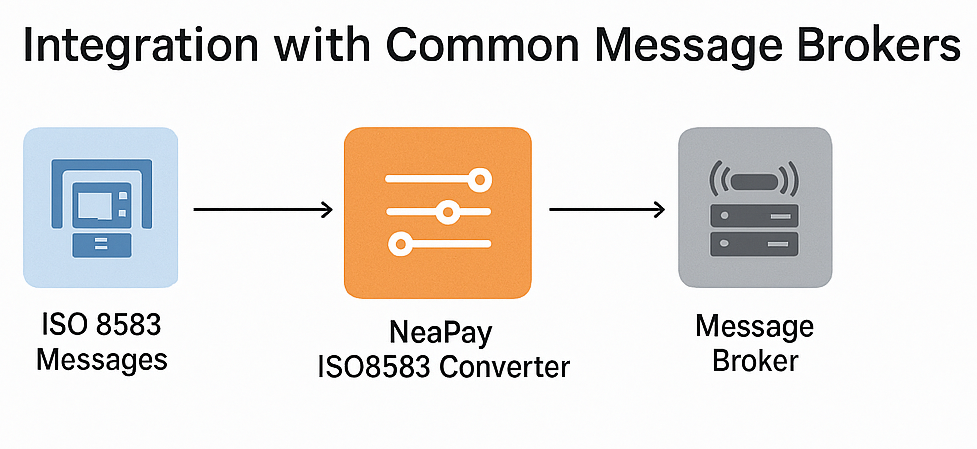
The neaPay ISO8583 Switch implements automatic failover as a core capability, not an add-on. Every element of correct failover handling described above is built into the switch and configured through the same routing configuration layer that defines the primary routing rules.
Health monitoring is continuous. The switch sends echo messages to each configured acquirer on the interval defined in the acquirer connection configuration. Echo responses are tracked; a configurable number of consecutive failures marks the acquirer as unhealthy and triggers evaluation of the failover condition.
Failover triggers are configurable per acquirer. You define the combination of conditions — echo failures, transaction timeouts, response codes — and the threshold within a time window that constitutes a failover trigger. The defaults are calibrated for typical production environments; the configuration allows adjustment for environments with specific latency or reliability characteristics.
Reversal handling is automatic. When a transaction times out and the switch determines that failover should be triggered, it sends a reversal to the primary acquirer for the timed-out transaction, retries the reversal until delivery is confirmed or a maximum retry count is reached, and logs the reversal outcome before routing the fresh authorization to the failover acquirer. This reversal flow is not optional — it is the default behavior for timeout-triggered failover.
In-flight transaction protection handles the transactions that were sent to the primary acquirer before the failover trigger was reached. Each in-flight transaction is tracked with its send timestamp and STAN. When failover is triggered, each in-flight transaction is individually evaluated: if a response has been received, it is processed normally; if the transaction has timed out, the reversal flow is initiated; if the transaction is within its timeout window, it is allowed to complete or time out before reversal handling is applied.
Recovery validation requires a configurable number of consecutive successful echo message exchanges before the primary acquirer is reinstated as the routing destination. The failover destination continues to receive transactions during the recovery validation period. Once the primary acquirer passes the validation threshold, new transactions are routed to the primary acquirer and the failover destination returns to standby status. In-flight transactions on the failover destination at the time of reinstatement are allowed to complete normally.
Failover event logging captures every state transition — acquirer marked unhealthy, failover triggered, reversal sent, failover acquirer activated, recovery validation started, primary reinstated — with timestamps, transaction IDs, and the specific trigger conditions that caused each state change. This log is written to the same transaction log destination as all other switch events, making it available to whatever reconciliation or monitoring systems read that destination.
Alerting is configurable. The switch can emit a notification on any state transition — via a webhook, a message queue event, or a log entry at a specific severity level — so that your operations team receives awareness of failover events without being required to act on them to restore transaction flow.
What Your Operations Team Does When Failover Is Automatic
The shift from manual to automatic failover changes the operations team's role from incident responders to incident reviewers. The distinction matters.
As incident responders, the operations team is in the critical path of payment recovery. Every acquirer outage is an on-call event that requires immediate human action. Response time directly determines the duration of the outage. The team must be available, trained, and equipped to act correctly under time pressure at any hour.
As incident reviewers, the operations team receives a notification that failover has occurred and that transactions are flowing normally on the failover acquirer. They review the failover log to understand the trigger conditions and the scope of impact. They monitor the primary acquirer's recovery. They assess whether the failover trigger thresholds need adjustment based on the specific failure pattern observed. They communicate with the primary acquirer's support team about the outage. None of these activities are time-critical in the same way that manual failover activation is.
The operations team still needs to exist and still needs to understand the payment environment. What they no longer need to do is be the mechanism by which payment continuity is restored. The switch is that mechanism. The operations team monitors, reviews, and improves — they do not activate.
For organizations without a 24/7 payments operations team — which includes most fintechs, most banks building digital products, and most organizations for whom payment processing is a capability rather than a core competency — this distinction is the difference between a backup acquirer relationship that actually provides resilience and one that only provides resilience during business hours.
The Operational Reality of Payment Availability
Payment systems fail at inconvenient times. Not because the universe is malicious, but because high-traffic periods — evenings, weekends, peak shopping seasons — are also the periods when acquirer infrastructure is under the most stress, when network events are most likely to affect high-volume connections, and when the business impact of an outage is highest.
A failover system that requires human intervention is a system whose availability is bounded by human availability. If your operations team works business hours in a single time zone, your payment availability during off-hours is exactly as good as a single acquirer connection with no backup — which is to say, it is as good as your primary acquirer's uptime, which is not 100%.
Automatic failover removes that bound. It makes payment availability a function of your infrastructure's reliability rather than your team's schedule. For most organizations, that is the correct design.
The investment required to get there — a switch with correct failover implementation, configured for your specific acquirer connections and routing requirements — is orders of magnitude smaller than the investment required to staff 24/7 payments operations coverage. And unlike 24/7 staffing, it does not scale with your transaction volume, your number of acquirer relationships, or your geographic expansion.
Want to see what automatic failover looks like for your specific acquirer connections? neaPay engineers can walk through your current acquirer setup, the failure modes most relevant to your environment, and the failover configuration that would handle them correctly — including reversal handling, recovery validation thresholds, and alerting integration. Bring your acquirer documentation and your uptime requirements; the rest is configuration.