How to Route Card Transactions to Multiple Acquirers Without Building a Custom Switch
Category: ISO8583 Switch Target reader: CTO, Tech Architect, Payments Consultant Keywords: ISO8583 transaction routing, multi-acquirer switch, BIN routing ISO8583, card transaction router, payment switch no development
Most payment integrations start with a single acquirer. You connect to one bank or payment processor, route all your transactions through that connection, and move on to building your actual product. It works — until it does not.
The single-acquirer model has a ceiling. It shows up when your primary acquirer goes down during peak trading hours and you have no fallback. It shows up when you expand into a new geography and discover your existing acquirer does not support the local card schemes or settlement currency. It shows up when your transaction volume grows large enough that acquirer fees become a meaningful cost line and you realize you have no leverage to negotiate because you have no alternative. It shows up when a specific card brand offers better interchange economics through a different acquiring relationship that you cannot access because all your transactions go to one place.
The solution to all of these problems is multi-acquirer routing: the ability to send different transactions to different acquirers based on configurable rules, and to switch between acquirers dynamically when conditions change. The infrastructure that provides this capability is a payment switch.
The question this article addresses is how to get multi-acquirer routing without the months of engineering work that building a custom switch normally requires.
What a Payment Switch Actually Does
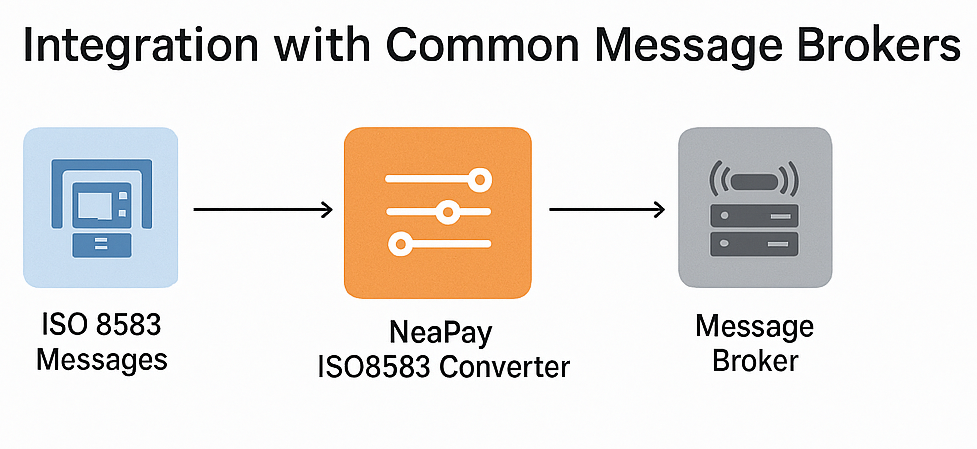
The term "payment switch" gets used loosely in the industry to mean different things in different contexts. For the purposes of this article, a payment switch is a component that sits between your transaction sources — your applications, terminals, or payment channels — and your acquirer connections, and makes routing decisions about where each transaction should go.
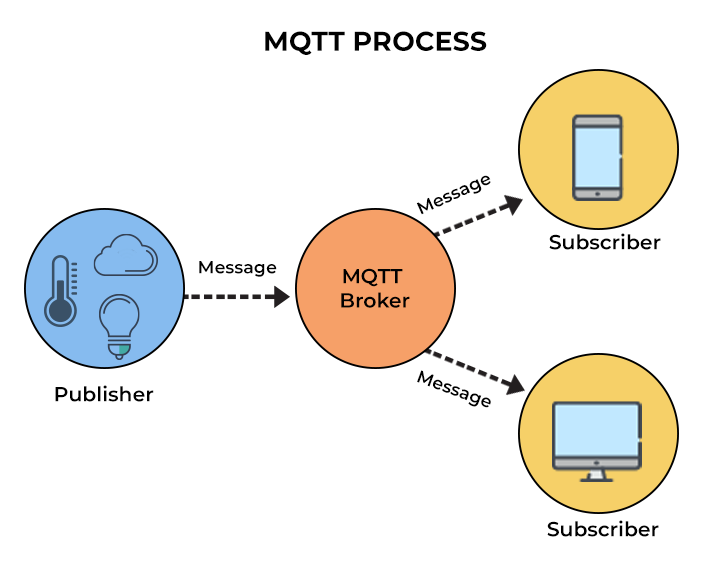
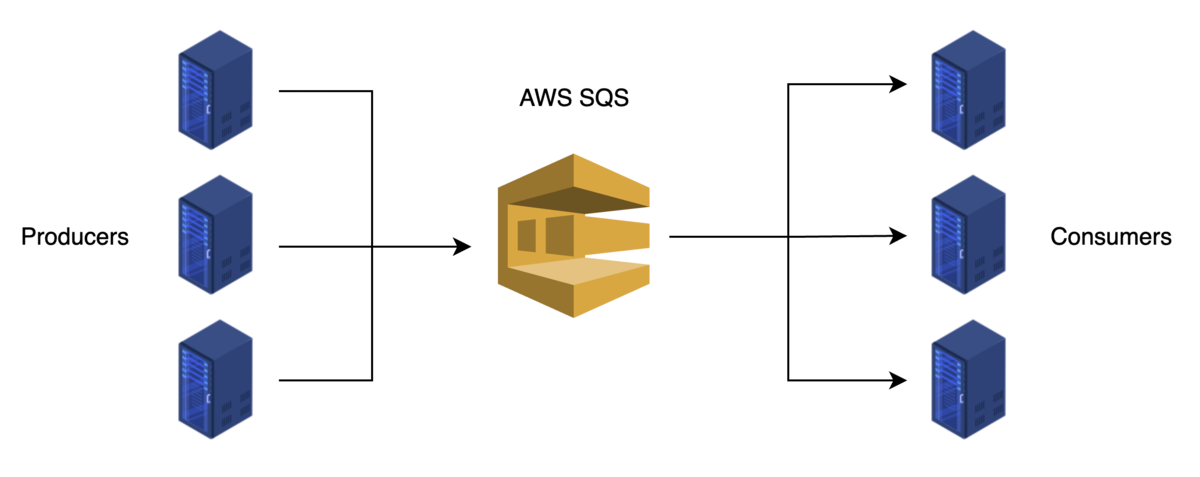
At its core, a switch performs four functions: it receives an inbound ISO8583 transaction message, evaluates it against a set of routing rules to determine the correct acquirer or host destination, forwards the message to that destination over the appropriate connection, and returns the response back to the originating source. Everything else a switch does — failover, load balancing, protocol conversion, transaction logging — is built around that central routing function.
The routing rules are where the business logic lives. A BIN-based rule routes transactions to a specific acquirer based on the first six or eight digits of the card number, which identify the issuing bank and card scheme. A brand-based rule routes Visa transactions to one acquirer and Mastercard transactions to another. A geography-based rule routes transactions from a specific country or region to an acquirer with local settlement capability. An amount-based rule routes high-value transactions to an acquirer with better rates for large-ticket processing. A cost-optimization rule routes transactions to the acquirer offering the lowest effective fee for a given card type and transaction profile.
These rules can be simple or complex, static or dynamic. What they have in common is that they are business decisions — decisions about commercial relationships, geographic strategy, risk management, and cost optimization — that should be expressible in configuration, not embedded in custom code that requires a payments engineer to modify every time the business strategy changes.
Why Organizations End Up Building Custom Switches (And Why That Goes Wrong)
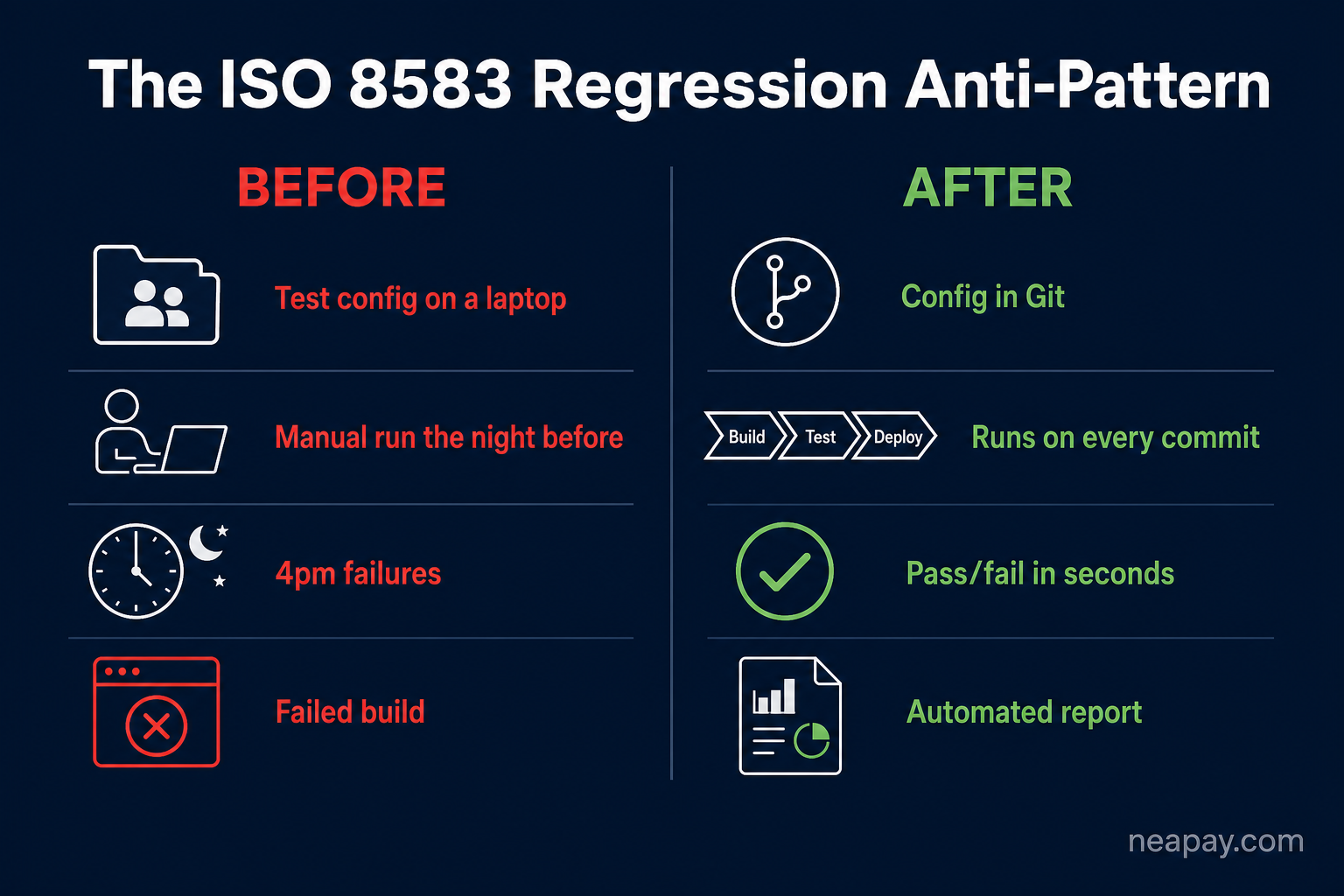
When an organization first decides it needs multi-acquirer routing, the path of least resistance looks like extending the existing integration code. You already have a connection to acquirer A. You add a connection to acquirer B. You add an if-statement that routes based on BIN range. You ship it.
This works for exactly the scenario you designed it for. It stops working the moment the scenario changes — which it always does.
The first extension is easy. The second is harder. By the third acquirer relationship, the fourth routing condition, and the second geography, the routing logic has grown from an if-statement into a significant body of code that nobody fully understands anymore, that has edge cases discovered only in production, and that requires careful engineering involvement every time a new routing requirement arrives from the business.
The deeper problem is that custom routing code conflates two things that should be separate: the protocol-level work of managing ISO8583 connections and message handling, and the business-level work of defining routing rules. When these are mixed in the same codebase, changing a routing rule requires touching protocol code. Adding a new acquirer connection requires touching routing logic. Each change carries risk across the entire system.
A payment switch separates these concerns structurally. The protocol layer — connection management, message encoding, bitmap handling, echo messages, failover detection — is handled by the switch infrastructure. The routing rules — which acquirer for which transaction under which conditions — are expressed in configuration that the switch evaluates at runtime. Changes to routing rules do not touch protocol code. Adding a new acquirer connection does not touch routing logic. The two concerns evolve independently.
When that separation is built into a product rather than constructed from scratch, both layers benefit from expertise and testing that a custom implementation cannot realistically match.
The Three Routing Scenarios That Drive Most Multi-Acquirer Decisions
Understanding the common routing scenarios makes it easier to evaluate what a switch needs to handle and why the configuration needs to be flexible.
BIN-based routing is the most fundamental scenario. The Bank Identification Number — the first six to eight digits of a card number — identifies the issuing bank, the card scheme, and often the card product type. Different BIN ranges may need to go to different acquirers: a domestic BIN range to a local acquirer with lower domestic interchange fees, an international BIN range to an international acquirer with better cross-border processing capability, a specific corporate card BIN range to an acquirer that offers enhanced data processing for business cards.
BIN routing requires maintaining a BIN table — a mapping of BIN ranges to routing destinations — and evaluating each transaction's PAN against that table in real time. The table needs to be updatable without restarting the switch or interrupting transaction processing, because BIN assignments change and new acquiring relationships bring new routing requirements.
Brand-based routing routes transactions based on the card scheme — Visa, Mastercard, Amex, UnionPay, a domestic scheme — rather than the specific BIN. This is common when an organization has acquirer relationships optimized for different schemes: one acquirer offering preferential Visa rates, another with better Mastercard economics, a third specifically for domestic scheme processing. Brand-based routing is simpler than BIN-based routing because the scheme is derivable from the BIN without a full lookup table, but it still requires the switch to identify the scheme from the card number and apply the correct routing rule.
Failover routing is less about commercial optimization and more about operational resilience. When the primary acquirer for a transaction type is unavailable — connection down, host unresponsive, response timeout — the switch automatically routes to a secondary acquirer without any intervention from your operations team and without the transaction being lost or the customer experiencing a failure. Failover routing requires the switch to detect acquirer unavailability in real time, maintain awareness of the health of each acquirer connection, and apply fallback routing rules that direct transactions to available alternatives during outage periods.
These three scenarios cover the majority of multi-acquirer routing requirements. A switch that handles all three through configuration — without requiring code changes for each new rule or each new acquirer relationship — provides the routing capability most organizations need without the custom development overhead.
What Building a Custom Switch Actually Costs
The cost of building a custom payment switch is consistently underestimated, for the same reasons that ISO8583 integration timelines are consistently underestimated: the visible work is small, and the invisible work is large.
The visible work is the routing logic itself. Given a transaction, pick an acquirer. That is straightforward to sketch and deceptively simple to underestimate.
The invisible work is everything else a switch must do to be production-reliable.
Connection pool management. A switch maintains persistent TCP connections to multiple acquirers simultaneously. Each connection needs its own keep-alive logic, echo message handling, health monitoring, and reconnection behavior. Managing a pool of such connections — detecting failures, reconnecting with appropriate backoff, preventing connection storms when multiple acquirers go down simultaneously — is a significant body of infrastructure code that has nothing to do with routing logic but is entirely necessary for the switch to function reliably.
Message correlation across connections. When a transaction is routed to acquirer A, the response comes back on the acquirer A connection. When a failover sends the same transaction to acquirer B after a timeout on acquirer A, the response may come back on the acquirer B connection — or, in rare cases, on the acquirer A connection after the timeout has already triggered. The switch must handle all of these scenarios correctly, ensuring that responses are correlated to the correct originating request, that duplicate approvals are detected, and that reversals are sent to the correct acquirer when a response was received after a timeout.
Transaction logging and auditability. Every transaction a switch handles must be logged with sufficient detail for reconciliation, dispute resolution, and regulatory audit. This includes the original request, the routing decision and the rules that produced it, the acquirer the transaction was sent to, the response received, and any failover events that occurred. This logging must be reliable — not dropped under load, not corrupted by concurrent writes — and queryable with enough structure to support the reconciliation processes your finance team depends on.
Performance under load. A switch that handles 10 transactions per second in testing may behave very differently at 500 TPS during a peak trading period. Connection pool contention, routing table lookup performance, and logging write latency all behave differently under load. A custom switch that has not been performance-tested at realistic peak volumes is a production risk.
Configuration management. Routing rules need to change without restarting the switch. BIN tables need to be updated without transaction interruption. New acquirer connections need to be added without service downtime. A custom switch that requires a restart for any configuration change is operationally unacceptable in a production payment environment.
Each of these concerns represents weeks of engineering work beyond the routing logic itself. The total engineering investment for a production-reliable custom switch, built by a team without prior switch development experience, is typically six to twelve months — not counting ongoing maintenance.
How the neaPay ISO8583 Switch Works
The neaPay ISO8583 Switch is a deployable product that provides multi-acquirer routing through configuration rather than code. It handles all the infrastructure concerns described above — connection pool management, message correlation, transaction logging, performance under load, and configuration management — as built-in capabilities, so your team's work is limited to defining the routing rules and acquirer connections that reflect your specific business requirements.
Acquirer connections are defined in the switch's configuration: the host address, port, connection parameters, echo message interval, and ISO8583 dialect for each acquirer. The switch establishes and maintains persistent TCP connections to each configured acquirer, monitors their health continuously, and handles reconnection automatically when connections are lost. Adding a new acquirer is a configuration change, not a code change.
Routing rules are defined as ordered rule sets evaluated against each incoming transaction. A rule specifies a matching condition — BIN range, card scheme, transaction type, amount threshold, source channel, or any combination — and a routing destination: a specific acquirer, a load-balanced group of acquirers, or a prioritized failover chain. Rules are evaluated in order; the first matching rule determines the routing destination. The rule set is updatable at runtime without restarting the switch or interrupting transaction processing.
Failover behavior is configured per routing destination. For each acquirer or acquirer group, you define what constitutes a failure — connection loss, response timeout, specific response codes — and what the fallback destination is. When a failure condition is detected, the switch routes the transaction to the fallback destination automatically and sends a reversal to the original acquirer if a response was received after the timeout. No operations team intervention is required.
Transaction logging is handled by the switch for every message it processes: inbound request, routing decision, outbound message to acquirer, acquirer response, and any failover events. Logs are written to a configurable destination — file, database, or message queue — and structured to support reconciliation and audit workflows.
Protocol handling is fully managed by the switch: connection establishment, echo messages, bitmap construction, field encoding, STAN management, message correlation, and response handling. Your team does not write any ISO8583 code. The switch handles the protocol layer; your team defines the routing rules through configuration.
What Your Team Actually Configures
The configuration work your team performs to deploy the neaPay switch is entirely in the domain of your business requirements — not in the domain of payment protocol expertise.
You define your acquirer connections: for each acquirer, the host address, port, and the ISO8583 dialect profile that matches the acquirer's specification. neaPay provides pre-built profiles for common acquirer configurations, so in most cases this is selecting from an existing profile rather than defining a new one from scratch.
You define your routing rules: for each rule, the matching condition expressed in plain terms (BIN range 400000–499999, scheme Mastercard, amount greater than 10000) and the routing destination. The rule syntax is straightforward and does not require protocol knowledge.
You define your failover chains: for each primary acquirer destination, the fallback destination and the failure conditions that trigger failover.
You test the routing behavior using the neaPay simulator, which lets you send test transactions against the switch and verify that each transaction is routed to the correct destination according to your rules, without connecting to real acquirer systems.
That is the scope of your team's configuration work. The protocol complexity, the connection management, the message handling — all of that is inside the switch, handled by the product, invisible to your configuration layer.
From Single-Acquirer to Multi-Acquirer Without Rewriting Your Integration
One of the practical concerns organizations raise when evaluating a switch is what happens to their existing acquirer integration. If they have already connected to one acquirer directly — through their own code or through a previous integration layer — does adopting a switch require rebuilding that integration?
The answer is no, and the architecture makes clear why. The switch sits between your transaction sources and your acquirers. Your transaction sources — your application, your terminal management system, your payment channel — send ISO8583 transactions to the switch's inbound connection, exactly as they would send them to an acquirer directly. The switch makes the routing decision and forwards to the correct acquirer. From your transaction source's perspective, nothing changes: it is still sending ISO8583 messages to a connection and receiving responses. The only difference is that the connection it sends to is now the switch rather than a single acquirer.
Adding the switch therefore does not require modifying your transaction source. It requires pointing your existing inbound connection at the switch rather than directly at your current acquirer, defining your current acquirer as a routing destination in the switch configuration, and optionally adding additional acquirer destinations and routing rules to take advantage of the multi-acquirer capability you now have.
The migration path from single-acquirer direct connection to multi-acquirer switch is a configuration change and a connection endpoint update — not a code rewrite.
Ready to move beyond single-acquirer dependency? neaPay engineers can map your current acquirer setup, your target routing requirements, and your failover needs to a switch configuration that covers all three — and walk you through what the migration from your current setup looks like in practice. Bring your acquirer documentation and your routing requirements; the rest is configuration.