Integrating ISO8583 Payments into a Legacy ERP or Core Banking System: The No-Disruption Approach
Category: ISO8583 Converter Target reader: CTO, Tech Architect, Payments Consultant Keywords: ISO8583 legacy system integration, ISO8583 core banking connector, ISO8583 ERP integration, payment modernization no disruption, ISO8583 sidecar connector
Legacy systems do not get replaced. That is the first thing any architect who has worked in banking or enterprise software learns, usually the hard way. The core banking platform that went live in 2003, the ERP that was customized over fifteen years to fit the exact shape of the business, the payment processing module that nobody fully understands but everyone depends on — these systems persist not because organizations lack ambition, but because the cost and risk of replacing them is almost always higher than the cost and risk of working around them.
The challenge that comes up repeatedly in these environments is payment connectivity. A bank needs to route ISO8583 authorization messages through a host that sits behind a legacy core banking system. A retailer needs to get card transaction data into an ERP that was never designed to speak payment protocols. A fintech is building a new product on top of an existing acquiring relationship that speaks ISO8583, and the existing infrastructure cannot be touched without risking the production systems that process millions of transactions every day.
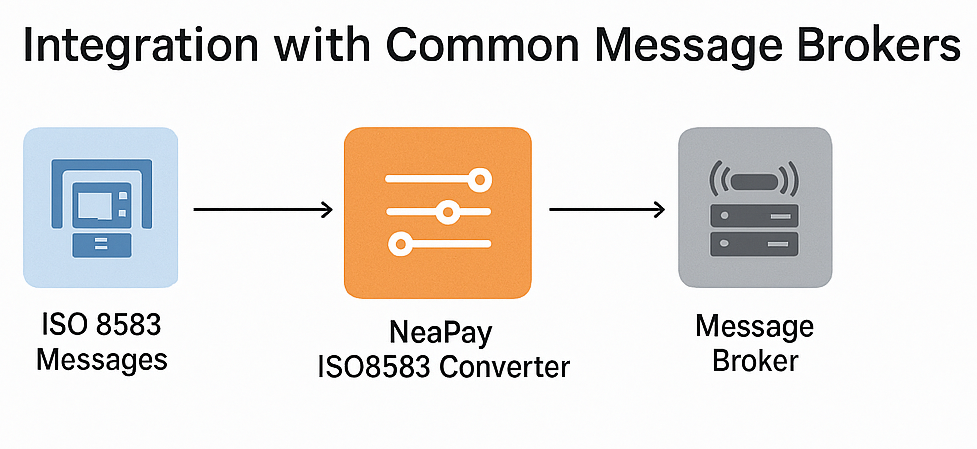
The answer in each of these cases is the same architectural pattern: a sidecar converter that translates between ISO8583 and whatever interface the legacy system understands, sitting alongside the existing infrastructure without modifying it, owned independently of the systems it connects.
This article explains what that pattern looks like, why it works where other approaches fail, and what it requires from your team to implement it.
The Core Problem With Legacy Payment Integration
Legacy core banking systems and ERPs were built with specific integration assumptions that reflect the technology of their era. A core banking platform from the late 1990s or early 2000s might expose data through direct database connections, flat file batch interfaces, proprietary messaging APIs, or SOAP web services. An ERP customized over many years might have a complex internal data model with tightly coupled modules where changes in one area produce unexpected effects in another.
These systems were not designed to speak ISO8583. More importantly, they were not designed to be modified easily — not because their original architects made poor decisions, but because stability and auditability were the primary design goals. A core banking system that processes millions of transactions daily cannot be updated with the same frequency and risk tolerance as a web application. Every change requires extensive regression testing, change control processes, and often regulatory review. The cost of a failed update is not a degraded user experience — it is a payment outage that affects every customer and potentially triggers regulatory scrutiny.
The natural response to this constraint is to avoid modifying the legacy system at all. But if you cannot modify the legacy system, how do you connect it to an ISO8583 payment network — or vice versa, how do you get ISO8583 payment events into a legacy system's data model?
The answer is that you do not connect to the legacy system directly. You build beside it.
What a Sidecar Converter Is and Why the Pattern Works
The sidecar pattern — a term borrowed from microservices architecture but applicable far more broadly — is the practice of deploying a separate, independent component alongside an existing system to extend its capabilities without modifying it. The sidecar handles a specific function, communicates with the main system through an interface the main system already supports, and is otherwise invisible to the main system's internal operation.
In the context of ISO8583 and legacy payment integration, the sidecar is an ISO8583 converter deployed as a separate process or service alongside the legacy system. It handles all ISO8583 communication — TCP connection management, message encoding and decoding, bitmap handling, scheme-specific protocol variants — and presents the result to the legacy system through an interface the legacy system already knows how to consume: a database write, a file drop, a SOAP call, a flat message over a local socket, or a REST call if the legacy system has been partially modernized.
The legacy system does not know the converter exists. It sees data arriving through its existing interfaces and responds through its existing interfaces. The converter translates between the ISO8583 world and the legacy world in both directions, absorbing all the protocol complexity that the legacy system cannot be asked to handle.
This is the no-disruption approach: not because it is timid or technically unsophisticated, but because it correctly identifies where the complexity should live and places it there without touching the systems that carry production risk.
Common Legacy Integration Scenarios
The sidecar pattern applies across a range of specific legacy integration scenarios, each with its own interface characteristics and constraints.
Core banking platform receiving authorization decisions. A bank's core banking system holds the account data needed to make authorization decisions: available balance, account status, spending limits, fraud flags. An ISO8583 authorization request arrives at the bank's payment host, and the host needs to query the core banking system to determine whether to approve or decline.
In many legacy bank architectures, the core banking system exposes account query functionality through a proprietary API or a direct database interface — not through a REST endpoint or an ISO8583 interface. The converter sits between the payment host and the core banking system. It receives the ISO8583 authorization request from the host, extracts the relevant fields (account number, amount, currency, transaction type), queries the core banking system through its existing interface, receives the response, constructs a valid ISO8583 authorization response, and returns it to the host. The core banking system is called through its existing interface and returns data in its existing format. It is not modified. It is not aware that it is now part of an ISO8583 transaction flow.
ERP receiving payment transaction data. A retailer or merchant organization uses an ERP — SAP, Oracle E-Business Suite, Microsoft Dynamics, or a custom system — as its system of record for financial transactions. Card payment transactions need to appear in the ERP's accounts receivable or cash management module in near real time for reconciliation and financial reporting purposes.
The ERP was not designed to receive ISO8583 messages. It receives financial transactions through its own posting interfaces: IDocs in SAP, open interfaces in Oracle, integration APIs in Microsoft Dynamics, or direct table inserts in custom systems. The converter translates each ISO8583 authorization response into the format the ERP's posting interface expects — extracting amount, currency, merchant reference, transaction datetime, and card type — and posts the transaction through the ERP's existing integration layer. The ERP receives a transaction record in its native format. The ISO8583 origin of that record is invisible to it.
Legacy payment switch receiving transactions from a modern application. An organization has a legacy payment switch — often a purpose-built appliance or an older software platform — that routes transactions to acquirers and handles authorization responses. A new digital product has been built on a modern stack and needs to submit payment transactions through the legacy switch for processing.
The modern application speaks JSON over HTTP. The legacy switch speaks ISO8583 over TCP. The converter sits between them: it accepts JSON authorization requests from the modern application through a REST interface, translates them into ISO8583 messages in the format the legacy switch expects, submits them over TCP, receives the ISO8583 response, translates it back to JSON, and returns it to the modern application. The legacy switch is never aware that the transaction originated from a modern microservice. The modern application is never aware that the switch speaks ISO8583. Each system sees its own native interface.
Gradual modernization of a legacy payment host. An organization is modernizing its payment processing infrastructure over time — replacing or augmenting a legacy payment host with a more capable modern system — but cannot perform a hard cutover without risking production transaction flows. The converter enables a parallel running approach: new transaction types or new channels are routed through the modern system while existing flows continue through the legacy host, with the converter providing consistent ISO8583 interfaces to acquiring partners in both directions. The modernization proceeds incrementally without any disruption to existing processing.
The Interface Compatibility Problem and How to Address It
The sidecar pattern works when the converter can communicate with the legacy system through an interface the legacy system already supports. In most cases, several such interfaces exist — the question is which one is most appropriate for the integration.
Database interface. Many legacy systems expose their data model through a database that the converter can read from and write to directly. If the legacy system's authorization logic works by reading account data from a database and writing authorization results to that same database, the converter can participate in that flow by reading and writing to the appropriate tables. This requires understanding the legacy system's data model well enough to read and write correctly — not trivially easy, but bounded and achievable without modifying the system's code.
File interface. Older systems frequently use file-based interfaces for batch and near-real-time data exchange: a designated directory where incoming files are placed and outgoing files are written, with the system polling for new files on a defined interval. The converter can participate in this interface by writing transaction data to files in the format the legacy system expects and reading response files the system produces. This is the least real-time option, appropriate for settlement and reconciliation flows rather than authorization flows where response latency matters.
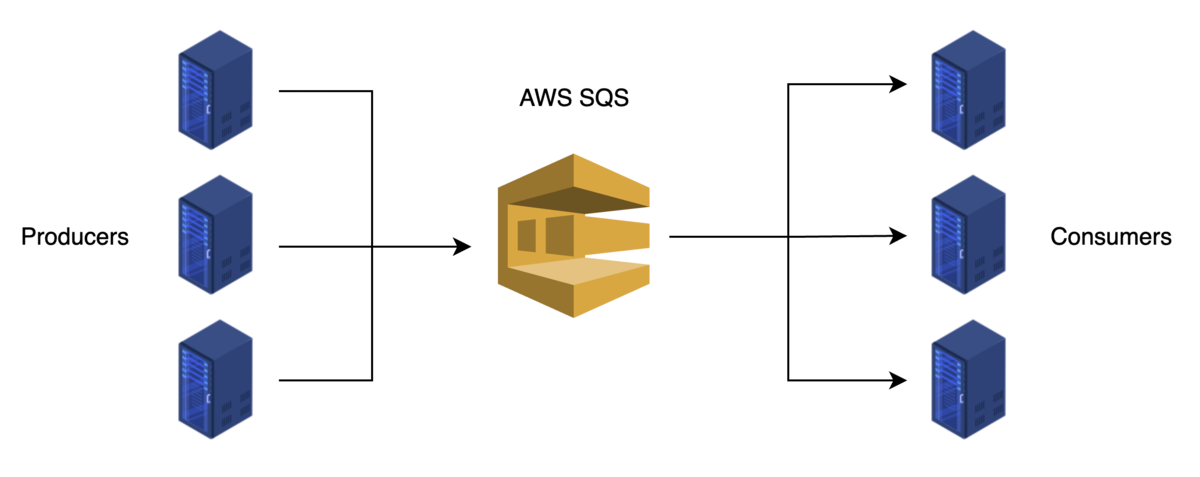
Message queue interface. Some legacy systems, particularly those that have been partially modernized, support message queue interfaces: IBM MQ, ActiveMQ, or similar. The converter can publish transaction events to a queue the legacy system consumes and subscribe to a queue where the legacy system publishes responses. This is a clean, decoupled interface that suits both real-time authorization flows and asynchronous event processing.
REST or SOAP interface. Legacy systems that have been wrapped with service layers — a common modernization pattern — may expose REST or SOAP interfaces for specific functions. If the legacy core banking system has a SOAP balance inquiry service, the converter can call that service as part of the authorization flow without touching the underlying system at all.
In practice, the neaPay converter supports all of these interface patterns. The specific interface used for a given integration is a configuration decision made based on what the legacy system already supports — not a constraint that requires modifying either the converter or the legacy system.
What Your Team Does Not Need to Do
When the sidecar converter handles the ISO8583 protocol layer, the list of things your team does not need to do is substantial.
Your team does not need to modify the legacy system. The entire point of the sidecar pattern is that the legacy system is untouched. No code changes, no schema migrations, no regression test cycles, no change control processes for the legacy platform.
Your team does not need to understand ISO8583. The converter encapsulates the protocol. Your team's integration work is limited to understanding the legacy system's existing interfaces — which they presumably already understand, since they have been operating the system — and configuring the converter's mapping rules to match.
Your team does not need to manage scheme connectivity. The converter owns the TCP connection to the card scheme or acquiring host, including keep-alive logic, reconnection handling, and echo message management. Your team does not write network code.
Your team does not need ISO8583 expertise to maintain the integration. When the scheme updates its specification, the converter's configuration is updated — not your integration code. When a new message type needs to be supported, the converter's mapping configuration is extended — not your legacy system's code.
What your team does need to provide is knowledge of the legacy system's interfaces: what the database tables look like, what the file format expects, what the queue message structure is. That knowledge already exists in your organization. The converter provides the ISO8583 expertise. Your team provides the legacy system knowledge. Neither side needs to acquire the other's expertise.
The Operational Model
A sidecar converter deployment is operationally simple relative to the alternative of modifying a legacy system.
The converter runs as a standalone process — a Java service, deployable on any Linux host, VM, or container. It can run on the same host as the legacy system if the legacy system runs on a platform that supports co-located processes, or on a separate host in the same network segment. It requires network connectivity to the card scheme or acquiring host on the relevant TCP port, and network connectivity to the legacy system on whatever interface is being used (database port, file share, queue connection, or HTTP endpoint).
It does not require access to the legacy system's internal code. It does not require changes to the legacy system's configuration. It does not need to be deployed through the legacy system's change management process, because it is an independent system that communicates with the legacy system only through external interfaces.
Monitoring the converter is independent of monitoring the legacy system. Logs, metrics, and health checks are the converter's own, separate from whatever observability the legacy system provides. If the converter has a problem, it can be restarted, reconfigured, or updated without any involvement from the legacy system's operations team.
This operational independence is not just convenient. It is a structural safeguard. A sidecar that can be operated independently cannot accidentally affect the legacy system it runs alongside. Production risk from the integration layer is contained to the converter itself — not spread across the legacy system that carries the most critical processing and the most serious consequences of failure.
The Broader Principle
Legacy systems persist because they work, and because the cost of disrupting them is high. The organizations that navigate payment modernization most successfully are not the ones that replace their legacy infrastructure fastest — they are the ones that extend it most cleanly, adding new capabilities at the edges without compounding risk at the core.
A sidecar ISO8583 converter is that kind of edge extension. It adds payment protocol capability to infrastructure that did not have it, connects systems that were never designed to speak to each other, and does so without touching the production systems where the real risk lives.
The no-disruption approach is not a compromise. It is an architecture that takes seriously the operational reality of the systems it connects — and delivers connectivity without the disruption that a direct integration would require.
Working with a legacy core banking platform or ERP that needs payment connectivity? neaPay engineers have handled this specific integration scenario across a range of legacy platforms and interface types. Bring your system's interface documentation and your connectivity requirements — the conversation starts from what your system already supports, not from what you would need to build.